The Hidden Work Behind Saying Yes to an Outing

Someone sends a text asking if you want to meet for lunch. A birthday invitation arrives. A friend suggests going to a festival on Saturday. Your church announces a community event. The school sends home information about a family activity. Someone in the group chat asks, “Who wants to go?” For many people, the decision […]
What Does Accessible Mean in a School?
Schools provide one of the clearest examples of why we have to be careful about describing a place as accessible. A school may have accessible parking, curb cuts, ramps, elevators, wide doorways, and accessible restrooms. Those features are important. They may allow a disabled student to physically enter the school and move through portions of […]
Being present is not the same as belonging.
A person can be in the room and still be completely left out. They can attend the class, sit in the sanctuary, come to the family gathering, participate in the community event, go on the field trip, show up for the meeting, or be invited to the celebration and still spend most of that […]
When a Church Says “Everyone Is Welcome,” What Will Disabled Visitors Experience?
“Everyone is welcome” is one of the most common messages communicated by faith communities. We see it on church websites, social media pages, outdoor signs, bulletins, event announcements, and invitations. In most cases, I believe churches sincerely mean it. They want people to walk through their doors and feel that there is a place for […]
Why Should Access Depend on Someone Having to Ask?
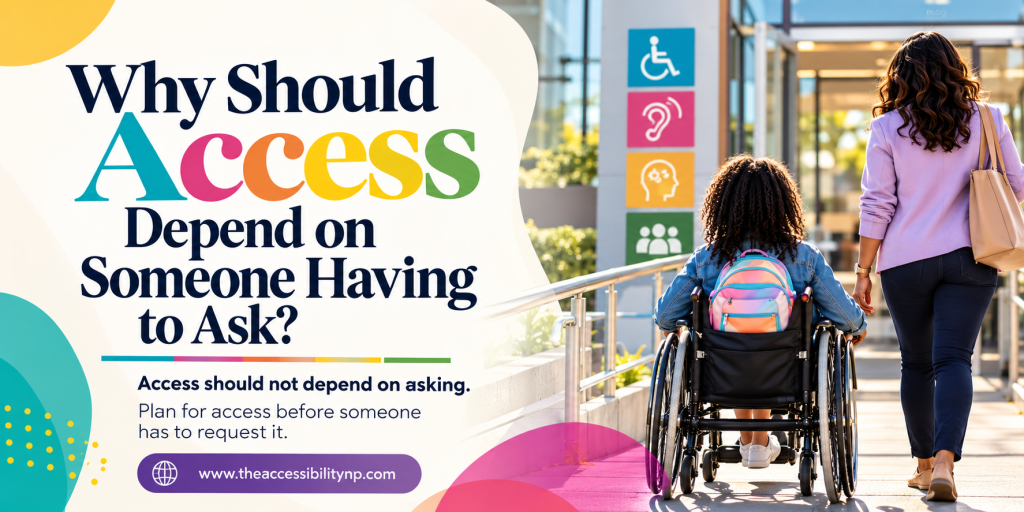
For many organizations, accessibility begins with a familiar statement: If you need an accommodation, please let us know. We see some version of this language everywhere. It appears on school forms, event registrations, conference materials, business websites, church announcements, employment documents, and community programs. The statement is usually well-intentioned. It communicates a willingness to respond […]