
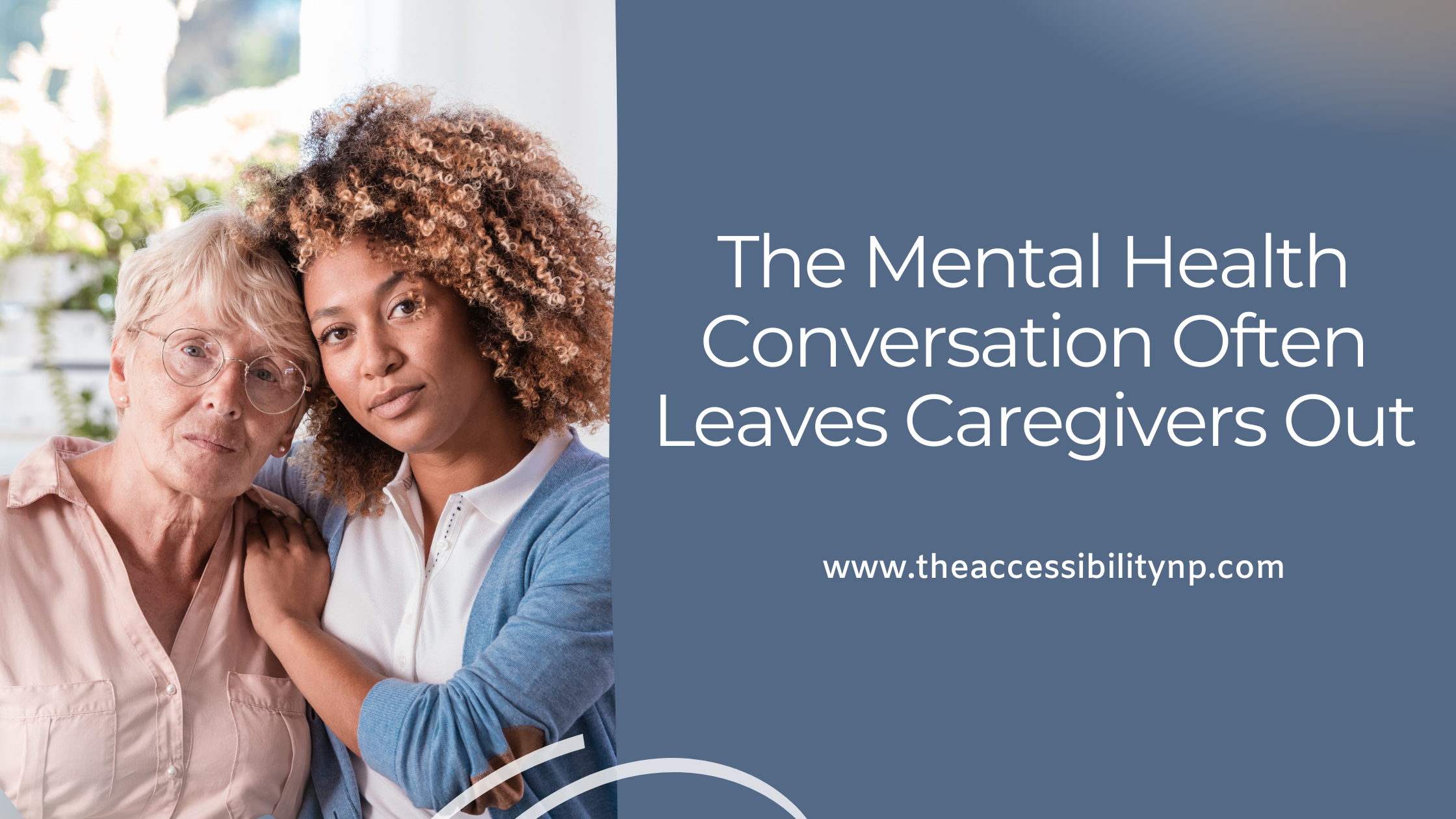
Mental Health Awareness Month often focuses on anxiety, depression, burnout, emotional regulation, and access to care. While these conversations are important, one group continues to be left out far too often — caregivers.
As a parent, advocate, educator, and accessibility consultant, I know firsthand that caregiving is layered. It is emotional. It is physical. It is constant. For many families within the disability community, caregiving does not end when the school day is over or after a medical appointment is complete. It continues throughout the day, throughout the night, and throughout nearly every part of daily life.
Caregivers are often balancing therapies, school meetings, behaviors, medical care, transportation, waiver services, communication supports, emotional regulation, insurance issues, and advocacy responsibilities while simultaneously trying to maintain work responsibilities, relationships, and their own well-being.
Many caregivers operate in survival mode for years.
Yet despite this reality, caregiver mental health is rarely centered in conversations surrounding support and wellness.
The Weight Caregivers Carry
Caregiving within the disability community often comes with invisible responsibilities that many people outside of the community never fully see.
There are appointments to schedule and attend, documentation to complete, emails to send, medications to refill, equipment to monitor, services to coordinate, and school concerns to address. Many caregivers are also managing behaviors, emotional regulation needs, transportation, therapies, communication supports, and safety concerns while simultaneously trying to maintain the rest of life around them.
Many families are also carrying emotional concerns about the future, independence, adulthood, long-term planning, financial stability, and whether appropriate supports will continue to remain in place.
Even moments that may appear simple to others can require significant planning and emotional energy for caregivers.
A trip to the grocery store.
A doctor’s appointment.
Transportation.
School drop-off.
Bedtime routines.
Community outings.
For some families, every part of the day requires flexibility, preparation, accommodations, and constant awareness.
Over time, this level of responsibility can become emotionally and physically exhausting.
Burnout Is Real
Caregiver burnout is real, and it is more common than many people realize.
Burnout does not always look dramatic. Sometimes it looks like functioning while completely exhausted. It looks like running on very little sleep, struggling to focus, forgetting basic self-care, or feeling emotionally drained while continuing to meet everyone else’s needs.
Many caregivers become so focused on supporting others that they stop recognizing their own level of exhaustion.
Chronic stress, emotional exhaustion, anxiety, sleep deprivation, isolation, overwhelm, and physical fatigue are realities many caregivers quietly carry every single day.
For many families, rest feels impossible because caregiving responsibilities do not pause.
There can also be guilt attached to burnout conversations within the disability community. Some caregivers worry that acknowledging exhaustion somehow means they love their family member less.
That is not true.
Caregivers can deeply love the individuals they support while also acknowledging that caregiving can be overwhelming.
Both things can exist at the same time.
Isolation Within Caregiving
Caregiving can also become isolating.
Many caregivers slowly lose connection with friendships, hobbies, routines, social activities, or opportunities for rest because so much time and energy is spent coordinating care and support needs.
Some families avoid outings because environments feel inaccessible, overwhelming, or judgmental. Others spend so much time navigating services and responsibilities that there is little energy left for connection outside of caregiving.
Isolation impacts emotional well-being.
Caregivers deserve community too.
They deserve spaces where they do not need to constantly explain, defend, educate, or advocate just to feel understood.
The Emotional Impact of Advocacy
Advocacy itself can become emotionally exhausting.
Many caregivers spend years fighting for accommodations, accessibility, communication access, therapies, evaluations, educational supports, healthcare, inclusion, and services.
Families are often expected to repeatedly prove needs that are already well documented.
This ongoing advocacy creates emotional fatigue.
There is also emotional weight attached to constantly preparing for the next barrier.
Will services continue?
Will accommodations actually be implemented?
Will healthcare providers listen?
Will the environment be accessible?
Will support staff understand?
Will my child be included?
For many caregivers, the mental load never fully turns off.
Sleep Deprivation and Emotional Wellness
Sleep deprivation is another major concern for many caregivers within the disability community.
Some families support individuals who experience sleep difficulties, nighttime medical needs, seizures, elopement concerns, behaviors, or high support needs that require overnight supervision.
Interrupted sleep over long periods of time impacts emotional regulation, stress levels, physical health, concentration, and overall mental wellness.
Yet many caregivers continue functioning despite severe exhaustion because caregiving responsibilities leave little alternative.
Mental health conversations must include the impact of chronic sleep deprivation on caregivers.
Caregivers Deserve Support Without Guilt
One of the most important messages caregivers need to hear is this:
Support is not selfish.
Rest is not selfish.
Boundaries are not selfish.
Taking care of mental health does not take away from being a good caregiver.
Caregivers deserve support systems too.
For some families, support may look like respite services, counseling, support groups, flexible work environments, or simply having people who understand the realities of caregiving without judgment.
For others, support may mean quiet moments, rest, routine, emotional validation, or having environments where they do not feel constantly overwhelmed.
Too often, caregivers are expected to continuously give without receiving support themselves.
That expectation is unsustainable.
Schools and Professionals Play a Role Too
Schools, providers, agencies, and professionals also play a role in caregiver mental health.
Families should not feel like they are constantly fighting systems alone.
Communication matters.
Collaboration matters.
Respect matters.
Listening matters.
Caregivers should feel heard and valued as important members of the support team.
When families feel dismissed, ignored, blamed, or unsupported, emotional stress increases significantly.
Supportive systems reduce stress for families. Clear communication, accessibility, compassion, flexibility, and follow-through matter more than many professionals realize.
Moving Beyond Awareness
Mental health awareness must move beyond awareness alone. It must lead to action.
It is about creating:
- support systems that include caregivers
- emotionally safe spaces for families
- accessible and inclusive communities
- opportunities for respite and rest
- disability-informed mental health support
- collaborative school and healthcare environments
- spaces rooted in compassion and understanding
- community connection without judgment
- environments where caregivers feel supported and heard
- systems that recognize the emotional impact of caregiving
Accessibility impacts emotional well-being.
Communication impacts emotional well-being.
Inclusion impacts emotional well-being.
Support impacts emotional well-being.
Caregivers deserve spaces where they feel supported not only in their caregiving responsibilities, but emotionally as well. Mental health conversations within the disability community must include the individuals carrying so much behind the scenes every single day.