Celebrating Identity, Honoring Struggle, and Demanding Access
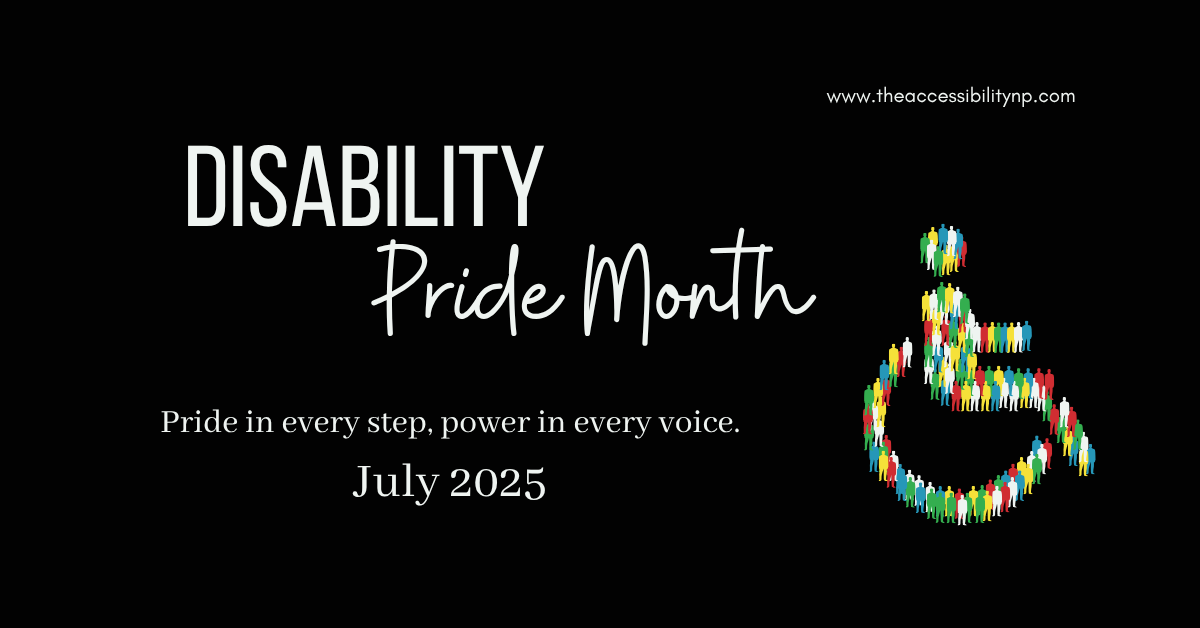
Every July, communities across the United States recognize Disability Pride Month, a time set aside to celebrate the lives, voices, and contributions of disabled individuals. This annual observance not only shines a light on the achievements of disabled people but also recognizes the barriers they continue to face—and the collective efforts to dismantle them.
Rooted in the passage of the Americans with Disabilities Act (ADA) on July 26, 1990, Disability Pride Month commemorates a pivotal moment in U.S. history when disabled advocates, allies, and lawmakers took a stand for civil rights. But July is more than just a date on the calendar—it’s a declaration of identity, community, and resistance.
What Is Disability Pride?
Disability Pride is not about masking or minimizing disability. It’s about showing up as we are—boldly, unapologetically, and with pride in who we are and what we bring to the table.
Just like other pride movements, Disability Pride affirms the worth of disabled people in every aspect of life. It rejects the idea that disability is something to hide or “overcome,” and instead centers disability as a meaningful part of human diversity.
Disability Pride is about celebrating the whole person—not despite disability, but including it.
The Origins of Disability Pride Month
Although the ADA was signed in 1990, Disability Pride Month didn’t begin as a national movement right away. The first official Disability Pride Parade took place in Boston in 1990, coinciding with the passage of the ADA. Over time, other cities joined the movement, including Chicago, which has hosted one of the largest and most visible Disability Pride Parades since 2004.
In more recent years, thanks to social media, grassroots activism, and increased visibility of disabled voices, July has become widely acknowledged as Disability Pride Month. What began as local celebrations has grown into a national and international recognition of the disabled community’s strength, culture, and advocacy.
Why July Matters
The Americans with Disabilities Act was a landmark civil rights law prohibiting discrimination based on disability. It addressed barriers in employment, transportation, education, public accommodations, and telecommunications. The ADA was not the beginning of the disability rights movement, but it was a crucial milestone—won through decades of activism and protest.
From the 504 Sit-Ins in 1977 to the images of activists crawling up the steps of the Capitol in 1990, the history behind the ADA is one of courage and urgency. The month of July is not just about celebration—it’s also about remembrance and recommitment.
We honor the advocates who paved the way and those who continue to fight for equity and justice today.
The Purpose of Disability Pride Month
While July is a time for parades, panels, art shows, and community events, it’s also deeply rooted in advocacy. Disability Pride Month serves several important purposes:
1. Celebrating the Achievements and Contributions of Disabled People
Disabled people have made—and continue to make—significant contributions in every sector: education, arts, science, sports, politics, and more. From Judith Heumann, a trailblazer in disability rights, to Haben Girma, the first Deafblind graduate of Harvard Law School, the stories of disabled individuals shape the world around us.
Disability Pride Month provides a platform to highlight these contributions and remind the world that disabled individuals are not passive recipients of care or charity—they are leaders, creators, innovators, and change-makers.
2. Raising Awareness About Disability Rights and Barriers
Despite the passage of the ADA over three decades ago, barriers persist. Inaccessible buildings, discriminatory hiring practices, ableist language, lack of accommodations, and systemic inequities continue to impact the lives of disabled individuals.
Disability Pride Month is an opportunity to educate the public about these realities—not just through statistics, but through personal stories and lived experiences. It challenges the myths and misconceptions that still surround disability and replaces them with truth, visibility, and connection.
3. Promoting Inclusion and Accessibility
Inclusion is not a favor. Accessibility is not optional.
Disability Pride Month reminds us that the built environment, digital spaces, schools, workplaces, and communities should be designed with everyone in mind from the beginning. Inclusive practices benefit all people—not just those who are disabled.
From closed captions on videos to ramps in public buildings, from sensory-friendly events to universal design principles, Disability Pride Month elevates the importance of creating spaces where everyone belongs.
4. Honoring the History and Struggles of the Disability Community
Disability history is often left out of textbooks and ignored in mainstream media. But the struggle for disability rights has been long and hard-fought.
From institutionalization and forced sterilization to modern-day issues like subminimum wage and ableist health care systems, the disabled community has experienced generations of oppression and exclusion. Yet through it all, disabled people have built rich cultures of advocacy, mutual aid, and resistance.
Disability Pride Month honors this legacy. It says: We remember. We honor. And we keep going.
What Disability Pride Looks Like
There’s no one way to celebrate Disability Pride. For some, it’s about community events and rallies. For others, it’s sharing their story online, participating in workshops, or simply taking a moment to honor their own identity.
Disability Pride Month can look like:
-
Attending or organizing a local Disability Pride Parade
-
Hosting an accessibility audit at your school, business, or organization
-
Highlighting disabled creators, authors, and speakers
-
Creating art, poetry, or music that reflects the disabled experience
-
Advocating for policy changes that remove systemic barriers
-
Having conversations with friends and family about ableism and inclusion
Whether quiet or loud, public or private, Disability Pride is about ownership. It’s about choosing not to hide or apologize—but to exist fully, authentically, and proudly.
The Disability Pride Flag
You may see the Disability Pride flag flying during July. It was redesigned in 2021 for greater accessibility and symbolism. The current flag features:
-
Black background to honor those who have suffered and died due to ableism
-
Five colors (red, gold, white, blue, green) in a zigzag stripe to represent the variety of experiences and disabilities: physical, cognitive/intellectual, psychiatric, sensory, and chronic illness/invisible disabilities
-
The zigzag shape represents the non-linear and creative ways that disabled individuals navigate the world
It is a powerful visual of disability identity and unity.
A Month, A Movement
While July may be the official month, the truth is that Disability Pride is year-round. The movement for access, inclusion, and acceptance doesn’t stop on August 1. In fact, some of the most meaningful work happens in the quiet moments—on the school playground, in the workplace, at the doctor’s office, in policy meetings, and in homes around the country.
Disability Pride Month is a reminder that advocacy never ends—but it also reminds us of the power of joy. Joy as resistance. Joy as visibility. Joy as proof that we belong.
For Allies: How You Can Support Disability Pride
Disability Pride Month is not only for those who identify as disabled—it’s also an important time for allies to listen, learn, and take action. Here are a few ways to show up:
-
Uplift disabled voices. Share content created by disabled individuals. Don’t speak over them—amplify them.
-
Evaluate your spaces. Is your website accessible? Is your event inclusive? Ask, assess, and adapt.
-
Challenge ableism. Whether it’s language, assumptions, or structural barriers—don’t ignore it. Speak up.
-
Educate yourself. Learn about disability history, legislation, and culture. Start with resources created by disabled people.
-
Follow through. Support doesn’t end in July. Inclusion must be embedded in your practices all year long.
Final Thoughts from The Accessibility NP
Disability Pride Month is deeply personal to us at @TheAccessibility_NP. This work is not just our profession—it’s our life.
We know that access isn’t just about ramps and devices. It’s about dignity, respect, and opportunity. It’s about belonging.
This July, we honor those who came before us. We stand beside those still fighting. And we celebrate those living fully in their truth.
Because Disability Pride is not about perfection—it’s about presence. It’s not about erasing difference—it’s about honoring identity. It’s not just a month—it’s a movement.
And we are proud to be part of it.